From concern to shared action
A practical look at the work between recognizing an injustice and building a response that people can join, sustain, and carry into their own communities.
 Emiliana GuerecaInvite Emiliana
Social Justice Speaker
Emiliana Guereca brings lived experience in advocacy, organizing, and movement-building to gatherings that want to move beyond concern and into meaningful action.

For gatherings with purpose
A social justice event carries a particular responsibility. People may arrive with different experiences, different levels of urgency, and different ideas about what change requires. The conversation has to make room for that complexity without leaving people stranded in it. A meaningful speaker can help a room name what is at stake, honor the people closest to the issue, and make a shared next step feel possible.
Emiliana Guereca brings that perspective from a career spent building public gatherings and the relationships that give those gatherings a life afterward. As founder of the Women’s March Foundation, she has helped turn public energy into ongoing work around advocacy, education, leadership, and care. Her experience spans organizing, event production, media, entrepreneurship, and creating places where people can gather around a cause with purpose.
That history matters for organizers planning a conference, nonprofit event, civic forum, campus program, or public conversation. An audience does not need a performance of certainty. It needs an honest account of what collective action asks of people: the willingness to listen, the courage to speak, the patience to build trust, and the discipline to keep going when attention moves elsewhere.
Emiliana speaks to those realities without flattening the people in the room into a single story. She understands that a student finding their voice, an organizer carrying a campaign, a donor looking for a responsible way to help, and a community member who has been let down by institutions may all hear the same conversation differently. Her approach makes space for that range while keeping the focus on the work people can do together.
For event planners, that balance is often the difference between a program people remember and one that changes the quality of the conversation afterward. Emiliana can help set a tone that is clear about the stakes without asking an audience to agree on every answer before it can participate. The room has permission to be curious, honest, and accountable, while still being asked to consider what it can carry forward.
That makes the program useful across many settings. A nonprofit may want to reconnect supporters to the people and purpose behind its work. A campus may want students to see that public life belongs to them. A company or cultural institution may need a fuller conversation about representation, belonging, and responsibility. The context changes, but the central question remains the same: how do people turn a shared value into work that has care, direction, and staying power?
The result is a program grounded in action rather than abstraction. Your audience can leave with language for the moment they are in, a clearer understanding of how movements are built, and a stronger sense that change is not reserved for the loudest person or the person with the most formal power.
Talk themes
Each conversation can be shaped around the event, the people gathered, and the kind of participation your community wants to make possible.
A practical look at the work between recognizing an injustice and building a response that people can join, sustain, and carry into their own communities.
A candid conversation about finding a public voice, staying present through uncertainty, and making participation feel possible for more people.
What helps a public moment grow into lasting work: clear purpose, trusted relationships, room for many voices, and a reason to keep returning.
Experience in the work
Emiliana knows that a powerful event is only the beginning. A room can create energy, connection, and a renewed sense of possibility. The harder question comes afterward: how do people carry that energy into the relationships, decisions, and practices that make a community stronger? Her speaking brings that question into focus.
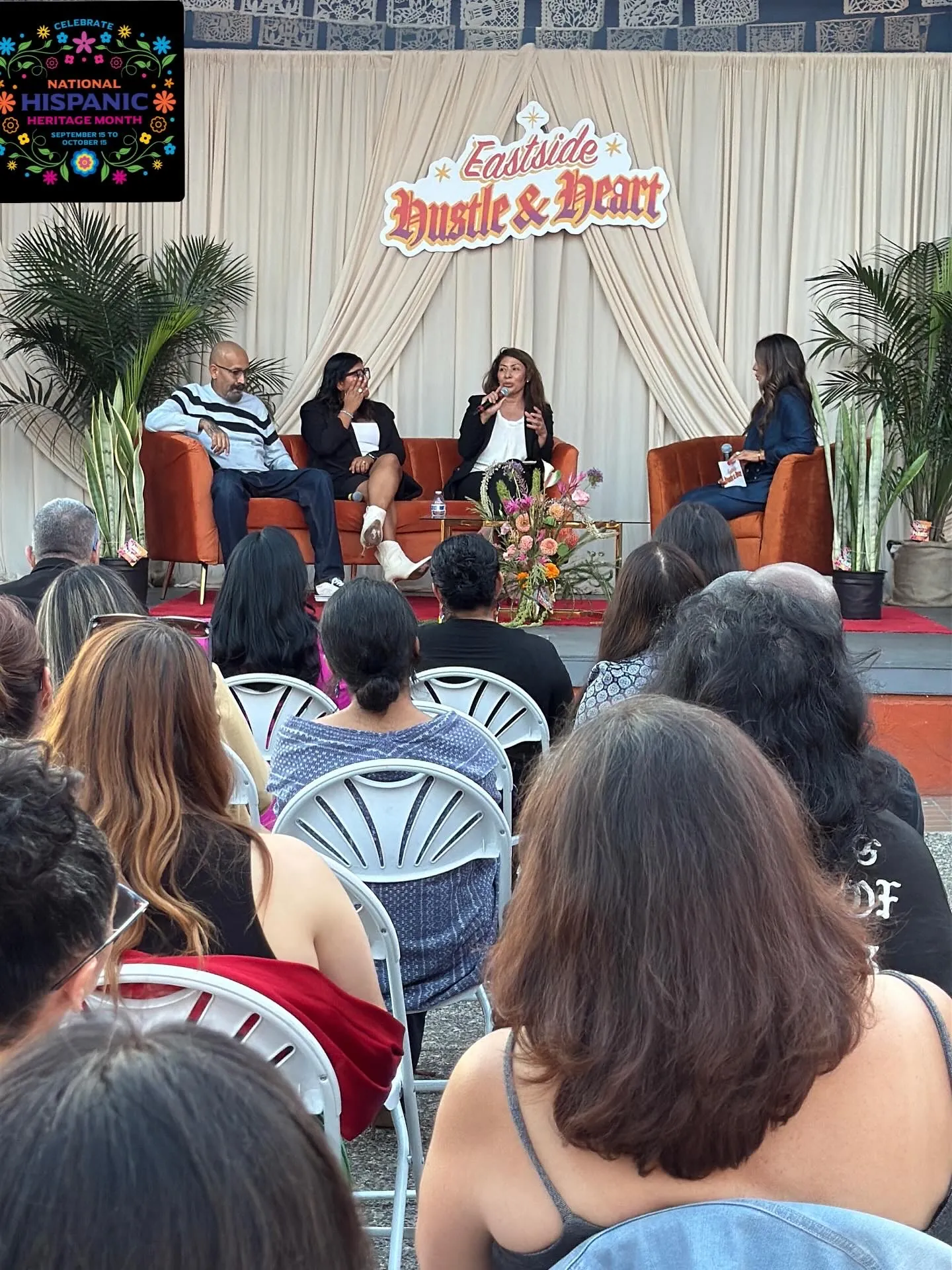
Through the Women’s March Foundation, Emiliana has helped build a lasting home for women’s advocacy, leadership, education, and action in Los Angeles. She has also appeared with universities, civic groups, community organizations, and cultural institutions, including Cal State LA, USC, UCLA, the League of Women Voters, Politicon, and the HOPE Conference.
Her work gives her a practical understanding of the work behind the microphone. Before people gather, someone has to listen for what matters, invite the right voices, create a welcoming room, and prepare for what follows. After the event, someone has to make it easier for people to stay connected. Emiliana can speak to that full arc with the clarity of someone who has built both the moment and the longer work around it.
For audiences, that means a perspective with substance. Emiliana can connect a personal story to the larger systems people are trying to change, while keeping the conversation close to the choices that build trust: who gets invited in, how people share responsibility, how disagreement is handled, and how a community decides to keep going.
Ways to gather
Start with the purpose of the event, the audience you are bringing together, and what you want people to carry into the next part of the work.
Open a social impact conference, civic gathering, campus program, or community event with a clear, human conversation about advocacy and collective action.
Create room for a focused exchange with a host, organizer, journalist, educator, or community leader around the questions your audience is facing now.
Bring an organizer’s perspective to a larger discussion on social justice, representation, women’s leadership, civic life, immigrant stories, or community care.
Give emerging leaders and advocates an honest view of how public work is built through preparation, relationships, and follow-through.
A conversation with accountability
Social justice conversations are often at their best when they resist easy answers. A strong program can acknowledge the real barriers people face, the histories that shape trust, and the ways power can determine who is heard. It can also refuse the idea that complexity is a reason to withdraw. Emiliana helps audiences hold both truths at once.
Her perspective is especially relevant for gatherings exploring advocacy, women in public life, immigrant stories, reproductive freedom, civic participation, entrepreneurship, representation, coalition-building, and community care. These are not distant topics in her work. They are questions she has lived through public events, advocacy, media, and relationships with people doing the work on the ground.
For an organizer, that creates a more useful kind of gathering. Instead of leaving people with a vague call to care more, the conversation can help them consider how they want to participate. Some may be ready to lead a project or speak in public. Others may be ready to learn from a local group, support a neighbor, bring someone else into the room, or make a commitment they can sustain. Each role can matter.
Emiliana’s approach is direct, generous, and grounded in the belief that movements are built by people who return to one another. She can help an audience see that social change is not only a headline, a rally, or a single leader. It is a practice of making the table bigger, staying accountable to the people affected, and choosing a next step that has enough care behind it to last.
Plan your event →Frequently asked questions
Emiliana speaks about advocacy, civic participation, women’s leadership, representation, community-building, coalition-building, and the work of turning a shared concern into meaningful action. Her perspective comes from years of organizing, producing events, building public spaces, and helping people stay connected to the work after a major moment has passed.
Emiliana is a strong fit for social impact conferences, nonprofit gatherings, civic forums, women’s leadership programs, college events, cultural institutions, employee programs, moderated panels, and community conversations. The best fit is an event that wants to give people a thoughtful, useful way to consider their role in what comes next.
Yes. A strong program starts with the people in the room. Share your audience, event format, goals, and the questions you want the gathering to hold, and the conversation can be shaped around that context.
Use the invitation form to share your event date, location, audience, format, and goals. Emiliana’s team will review the request and follow up about availability and next steps.
Your gathering
Share your event, audience, and the change you want people to consider together.
Invite Emiliana